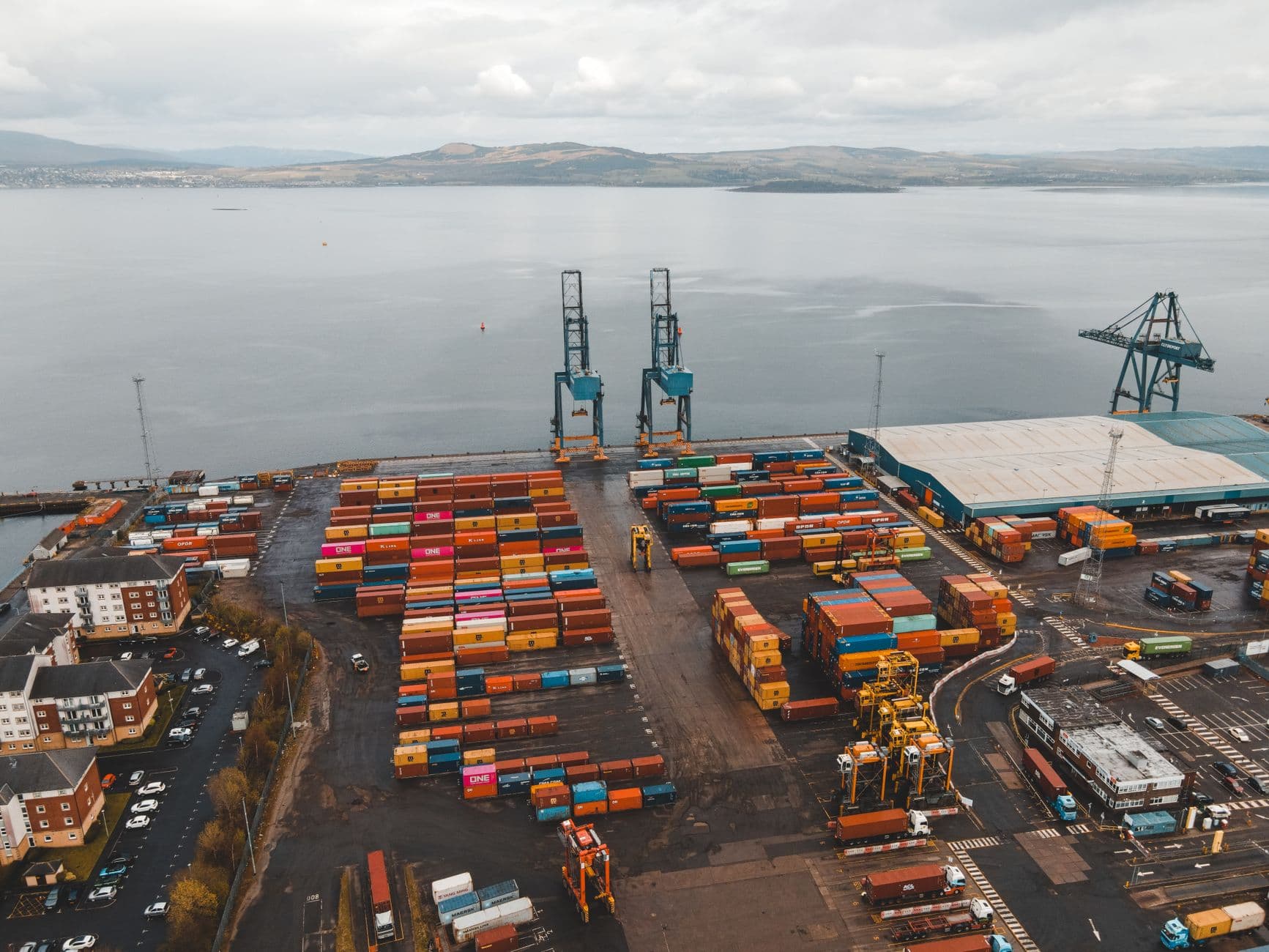
Customs · International Trade · Maritime

Importing and exporting is, above all, a legal operation.

Between shipment and clearance, several factors define the cost and the risk of every operation: the tariff classification of the goods, the tax base, the terms of the international contract and the bill of lading clause.

The firm acts at the critical moment of held or assessed cargo, and in the structuring that prevents the next problem — from defense in administrative proceedings before the Federal Revenue Service to the review of import, export and maritime transport contracts. We work both directions of cross-border trade: for the Brazilian importer and for the exporter or foreign counterparty on the other side of the deal — always from the standpoint of the party who retains us.

See practice areas
Corporate clients
Individual document review
Advisory and litigation practice
Corporate clients
Individual document review
Advisory and litigation practice
Corporate clients
Individual document review
Advisory and litigation practice
Corporate clients
Individual document review
Advisory and litigation practice
Corporate clients
Individual document review
Advisory and litigation practice
Corporate clients
Individual document review
Advisory and litigation practice
Preliminary review
Signs that an operation deserves legal review
Customs / Trade
Customs defense

Defense in customs measures and assessments

When the authorities hold the cargo, reclassify the goods or apply forfeiture, reaction time is short and deadlines are technical. The practice covers administrative and judicial defense of these measures.

01
Forfeiture penalty
Defense against forfeiture of goods, vehicles and currency, addressing proportionality and whether the alleged offence was in fact committed — under the specific procedure of Decree-Law 1.455/76, now decided by the CEJUL panel.
02
Held cargo and fiscal demand
Action to release cargo held under demand, routed to the red channel or under suspicion of documentary irregularity.
03
Tariff reclassification
Discussion of the goods' classification under the Mercosur Common Nomenclature and the tax effects of a reclassification by the authorities.
04
Customs valuation
Defense against customs valuation set by the authorities and underinvoicing claims, in light of the methods of the Customs Valuation Agreement.
05
Infractions and fines
Challenge to assessment notices and customs fines in administrative proceedings and, where necessary, before the courts.
06
Trade defense
Monitoring of trade-defense investigations and measures — anti-dumping, countervailing and safeguards — handled by SDCOM/CAMEX, that burden imports at clearance.
Trade taxation

Import and export taxes

The tax burden of a trade operation depends on classification, origin, regime and tax base — variables that allow for technical discussion and, in several cases, theses already settled in the courts.

Trade taxation
Special regimes and compliance

Special customs regimes and operational compliance

Much of the efficiency — and the safety — of a trade operation lies in structuring the right regime before shipment and in maintaining the documentary compliance that sustains it.

01
Drawback
Structuring and qualification of the drawback regime (suspension, exemption and refund) to relieve taxes on inputs used in exported goods.
02
Bonded warehouse and RECOF
Bonded warehouse and RECOF/RECOF-SPED regimes for manufacturing and storage under customs control.
03
Ex-tariff (ex-tarifário)
Ex-tariff applications to reduce Import Duty on capital and IT goods with no domestic equivalent.
04
Licensing and RADAR
RADAR/Siscomex qualification, review of limits and regularization of registration issues with the Federal Revenue Service.
05
Customs compliance
Compliance programs, operational due diligence and accession to programs such as AEO (Authorized Economic Operator).
06
DU-E and DUIMP
Support in filing and reviewing the Single Export Declaration (DU-E) and the Single Import Declaration (DUIMP), under Brazil's New Import Process (Portal Único Siscomex).
International logistics and maritime

International contracts, transport and maritime liability

When something goes wrong between seller, carrier and buyer, the answer lies in the agreed terms: the Incoterm, the bill of lading and the insurance policy define who bears the risk and the loss.

Does your company export commodities? The contractual and regulatory layer of mineral exports has its own questions — grade, price index, royalties and port logistics.

See the Mining Law page
International logistics and maritime
Who it is for

Importers, exporters, trading companies and carriers

The practice is designed for companies whose operation depends on the international flow of goods — and for those who need to solve a concrete customs problem or structure an operation safely.

Industries importing inputs, machinery and capital goods
Exporters and trading companies running international trade
Importers and distributors with cargo held or assessed at clearance
Carriers, freight forwarders and logistics operators
Companies seeking to structure special regimes and reduce tax cost
Businesses reviewing international contracts and customs risk management
How we operate

From urgent litigation to preventive structure

International trade combines tax, customs, international and maritime law — and requires a joint reading of the operation's documents, the applicable regime and the regulatory framework.

There is no single formula or guaranteed result: the strategy depends on available documentation and the technical and legal elements of each operation.
Integrated legal and operational analysis
A joint reading of the commercial invoice, tariff classification, contract and transport documents, without shortcuts.
Response to the urgent, focus on the structural
Immediate action on held or assessed cargo and construction of the structure that reduces the recurrence of the problem.
Advisory and litigation practice
Ability to structure the operation before litigation and to conduct administrative and judicial defense when needed.
Confidentiality and business service
Confidential treatment of commercial data, contracts and each client's cost structure.
International perspective
Attention to international conventions and practice — Incoterms, CISG and arbitration — that govern cross-border operations.
Nationwide and remote practice
Follow-up of operations and proceedings across different customs units, with continuous communication.
FAQ

Frequently asked questions on customs and international trade law

Talk to the firm

Is your international trade operation legally structured?

Early legal review of the operation makes it possible to assess, with technical criteria, the consistency of any fiscal demands, the suitability of the customs regime and the allocation of risk between the parties.

Service by appointmentIndividual reviewNationwide practice